

American ginseng, also known as Xi Yang Shen or Hua Qi Shen, is a popular choice for daily dietary supplementation. Although it belongs to the same family as the more familiar ginseng, it differs significantly in taste and usage. The first question many people have after buying it is: how many slices should you steep at once? And who should avoid it? In this article, I’ll draw on my own experience to clarify these questions once and for all.
How Many Slices of American Ginseng Should You Steep at Once? Here’s My Advice
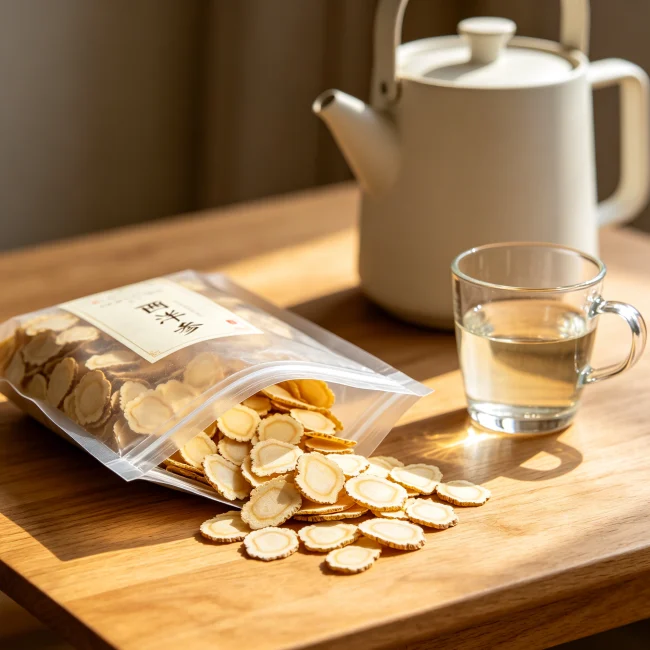
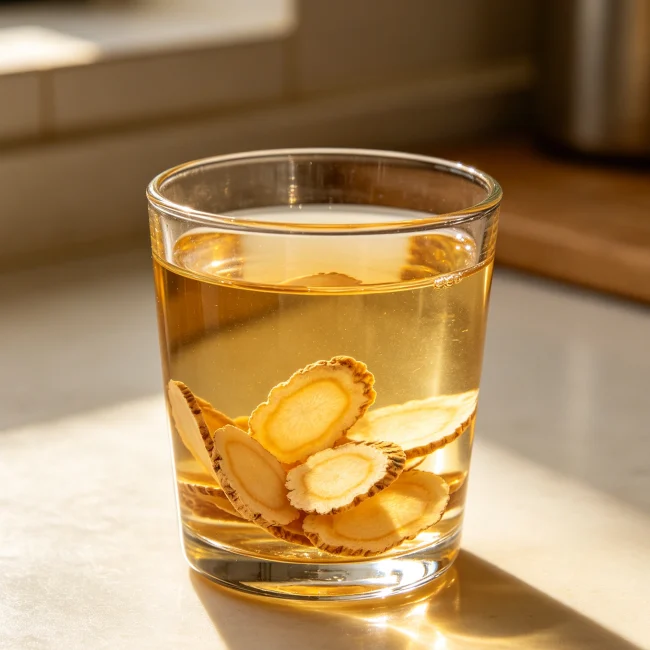
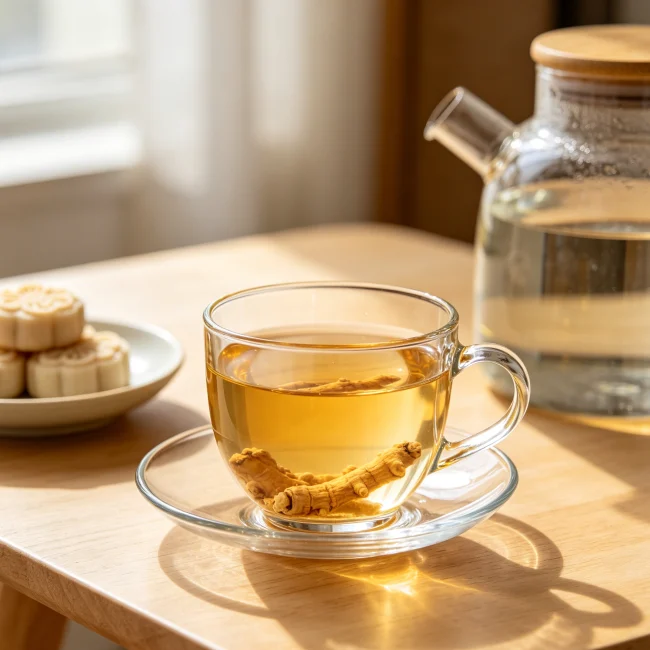
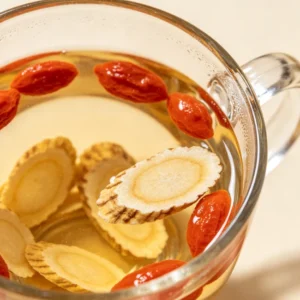
To be honest, there’s no standard answer to this question; it depends on the thickness of the slices and your personal taste. Typically, the American ginseng slices sold on the market are about 0.5 to 1 millimeter thick. I use medium-thickness slices and usually steep 3 to 5 slices in about 300 milliliters of hot water.
The brewed tea has a light golden color, a delicate fragrance, and a taste that starts bitter and then turns sweet. If you’re not used to the bitterness, start with 2 slices and gradually increase to a comfortable amount.
Some people prefer to steep the slices in a thermos. They put the slices in, fill it with hot water, seal it tightly, and let it steep for 10 to 15 minutes before drinking. This method produces a stronger flavor, so I recommend reducing the slices to 2 or 3; otherwise, the aftertaste can be too bitter.
How Is This Ginseng Different from Regular Ginseng?
American ginseng is mainly produced in three regions: the United States, Canada, and China. The ginseng from the US and Canada is locally called Hua Qi Shen. Due to the suitable climate and soil, the roots are plump, with a yellowish skin and clear texture. Domestic American ginseng mainly comes from Shandong and Northeast China and is much more affordable.
In terms of taste, imported ginseng has a stronger bitterness and a more pronounced sweet aftertaste. Domestic ginseng is relatively milder in bitterness, making it more suitable for first-timers. I’ve tried both, and I find that the tea from imported ginseng has a richer aroma, but for daily drinking, domestic ginseng is sufficient.
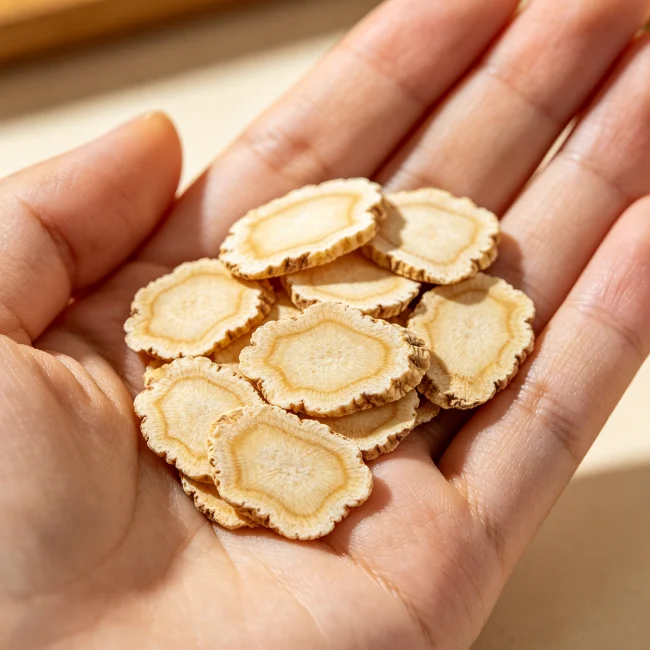
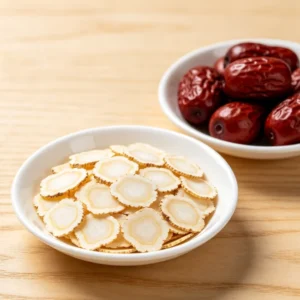
When selecting, look at the appearance of the slices. High-quality American ginseng slices are light yellow or light brown in color, with fine, dense textures and no black spots or signs of insect damage. They should have a faint, pleasant herbal aroma, without any musty or sour smell.
How to Choose Without Getting Ripped Off? Remember These Three Tips
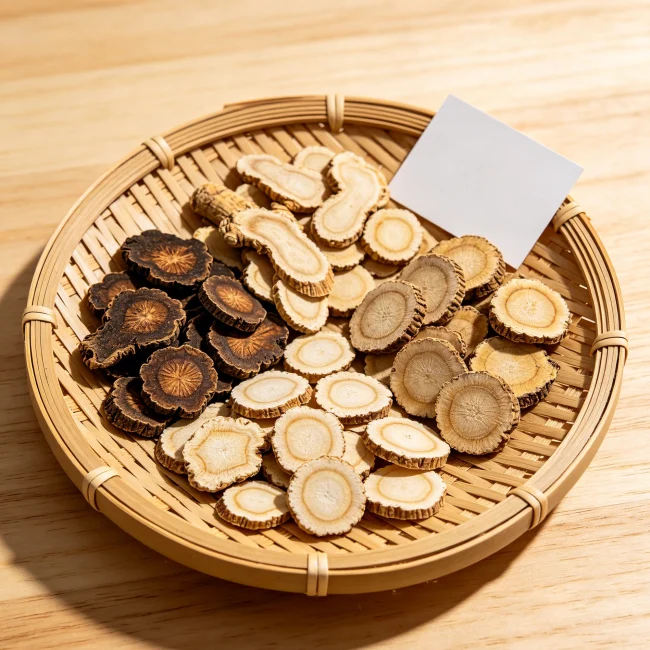
The biggest fear when buying American ginseng is getting a counterfeit or inferior product. Some people on the market use sun-dried ginseng or white ginseng slices to pass off as American ginseng, making it hard for laypeople to tell the difference. I’ve summarized three practical selection methods:
- Check the texture: Real American ginseng slices have a clear chrysanthemum heart pattern on the cross-section, which looks like radiating rings. Fake slices have blurry or no patterns at all.
- Taste it: Real American ginseng tastes bitter at first, then slowly turns sweet. If it’s only bitter with no sweet aftertaste, or if the flavor is too weak, it might be of poor quality or adulterated.
- Observe in hot water: When steeped in hot water, real American ginseng slices won’t disintegrate immediately and will retain their shape. Inferior slices will fall apart quickly, and the water will be cloudy.
In terms of price, high-quality imported American ginseng slices cost about 800 to 1500 yuan per catty. Domestic ginseng is cheaper, with good options available for 300 to 600 yuan per catty. Be wary of ginseng that is too cheap; don’t buy inferior products just to save money.
Dietary Taboos: Who Should Avoid It
Although American ginseng is relatively mild in nature, it’s not suitable for everyone. Based on my experience and general knowledge, the following groups of people are advised not to consume it:
- People with a cold or fever: When your body is in an inflammatory state, it’s best to stop consuming it and consider it again after recovery.
- People prone to bloating or indigestion: Some people experience stomach discomfort after eating ginseng. If you have this constitution, try a small amount first.
- Pregnant or breastfeeding women: The body is more sensitive during this period, so it’s recommended to avoid it and consider it after weaning the baby.
- People taking specific medications: If you are taking anticoagulants or blood pressure medication, consult your doctor first and don’t mix them on your own.
Additionally, it’s not recommended to consume American ginseng with radish, strong tea, or coffee. Radish can affect the absorption of ginseng, and the components in strong tea and coffee may reduce its effectiveness. I usually steep a cup on an empty stomach in the morning and wait half an hour before eating breakfast or drinking tea.
Storage Methods and Common Questions
After purchasing American ginseng slices, it’s best to store them in an airtight container away from direct sunlight. In humid weather, you can refrigerate them, but let them return to room temperature before opening the container to prevent moisture and spoilage.
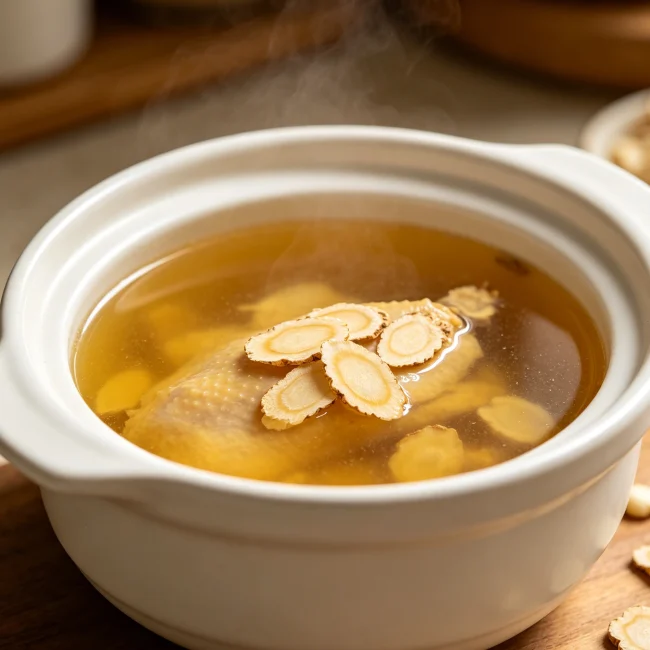
Besides making tea, American ginseng can also be used in soups. I occasionally stew the slices with chicken. The broth has a subtle ginseng aroma and tastes great. For soups, you can use more slices, about 8 to 10, as the cooking process dilutes the flavor.
Some people also ask me: Can American ginseng be ground into powder and taken directly? Grinding it into powder is indeed convenient, but I recommend not exceeding one small spoonful per dose. If taken directly, the powder will come into direct contact with the stomach and intestines, which might be irritating for some people. For first-timers, it’s safer to start with tea.
Conclusion
American ginseng is a staple ingredient in my home. From tea to soup, it’s versatile and has a pleasant taste. The key is not to use too much at once; start with 3 to 5 slices and adjust according to your taste. When buying, pay attention to the texture and taste to avoid inferior products. If you’re a first-time buyer, I suggest trying a small package first; if you like it, then buy a larger quantity.
This article is based on my personal experience. If you have your own methods or tips for selecting it, feel free to leave a comment below. If you like it, please like and follow me. I’ll continue to share more practical tips on ingredients in the future.
 Community Hot Discussion
 Featured
 Best Answer

No comments yet. Be the first to leave a comment!