

Whether American ginseng and tea can be brewed together is a question I often get asked. In reality, many people want to enjoy the nourishing benefits of American ginseng while maintaining their daily tea-drinking habit. Mixing them together seems convenient, but there are some details worth noting. Today, I’ll explain the correct way to brew American ginseng in water, pairing principles, and purchasing tips based on practical experience.
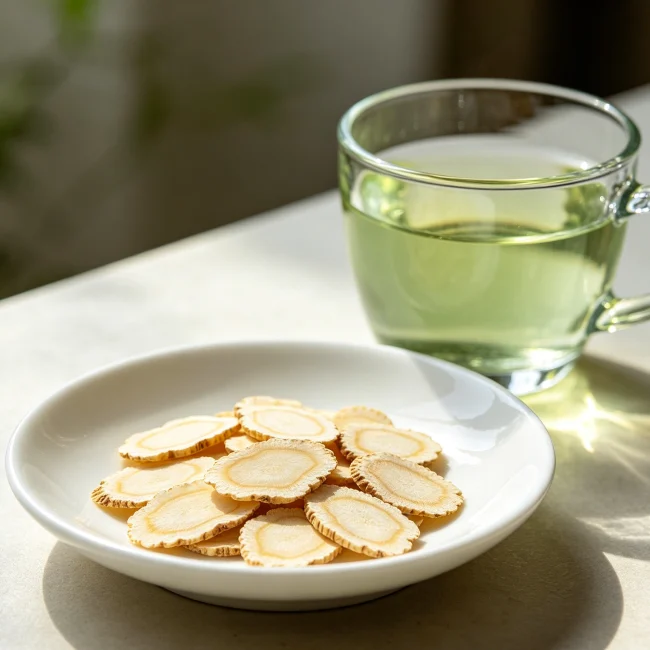
Can American Ginseng and Tea Be Brewed Together? Here’s the Answer
Let’s get straight to the conclusion: It is not recommended to brew American ginseng and tea together. The reason isn’t complicated; rather, the components in tea leaves can affect the release of nutrients from American ginseng and alter its taste. I’ve tried it a few times, and the resulting brew had an astringent taste, with the ginseng’s natural sweetness being masked, making it taste awkward.
If you really want to drink tea and consume American ginseng, my suggestion is to have them separately. For example, brew American ginseng water in the morning and drink your favorite tea in the afternoon, with a gap of two to three hours. This way, the effects of both are not compromised, and it’s more enjoyable to drink.
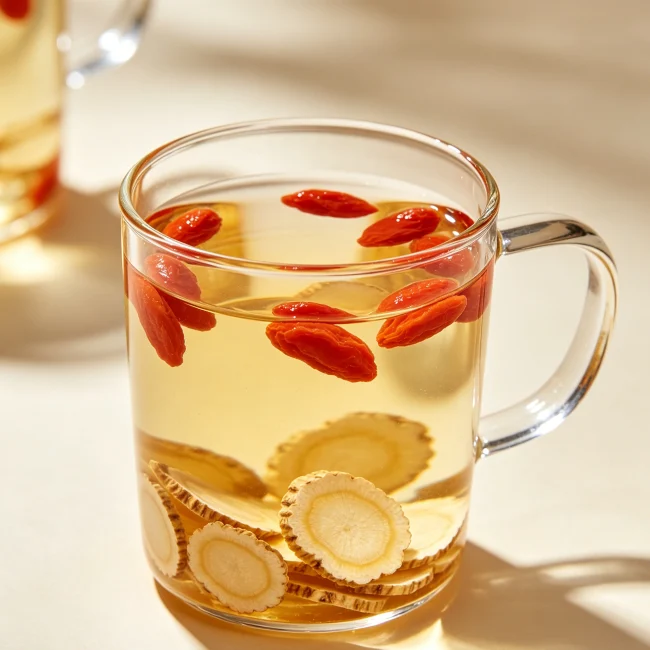
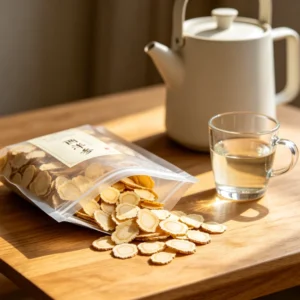
Additionally, the water temperature for American ginseng is also important. Using freshly boiled water directly to brew American ginseng slices can easily cook the slices, preventing the nutrients from being released. It’s recommended to use hot water at around 80 degrees Celsius, cover the cup, and let it steep for 10 to 15 minutes. When the slices soften and the water turns a light yellow, it’s the best time to drink.
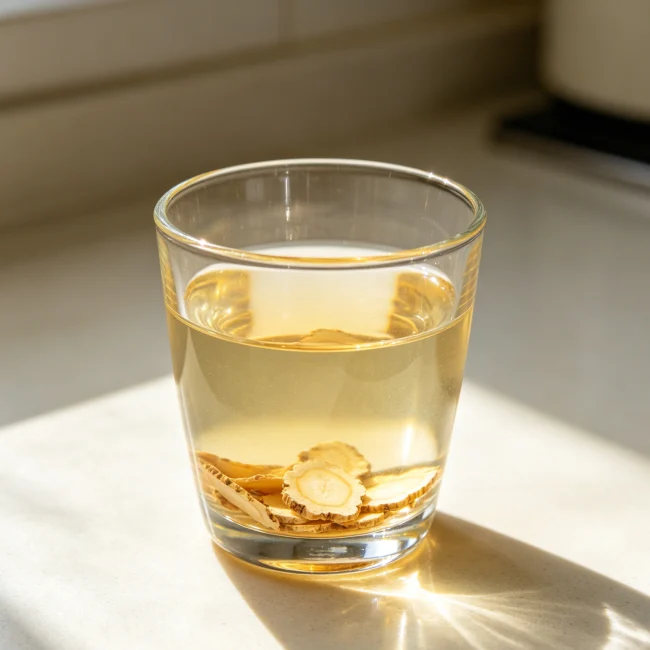
Correct Steps for Brewing American Ginseng in Water
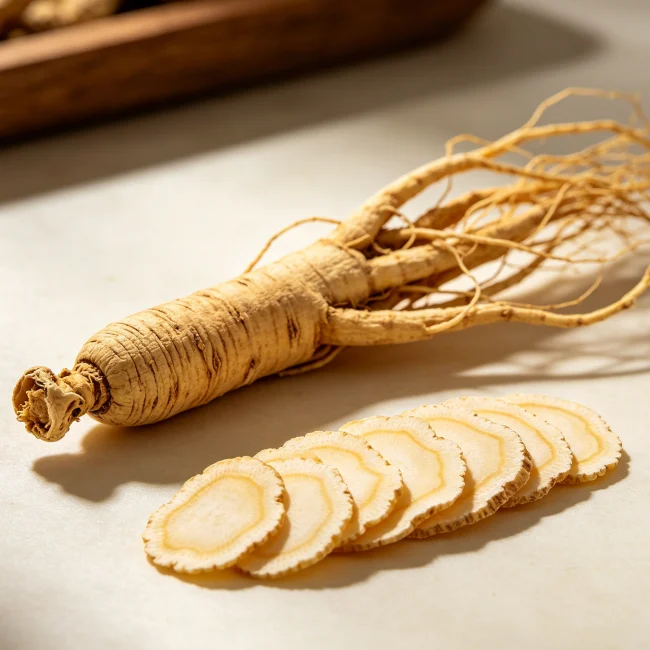
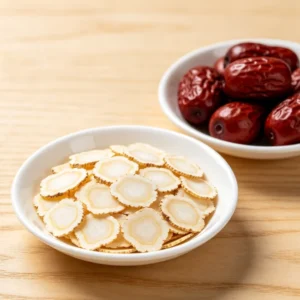
First, choose the right slices. If the American ginseng slices you buy are too thick, they won’t release their flavor even after steeping for a long time. I usually buy thin slices, about 1 to 2 millimeters thick, which soften easily in warm water. Take 3 to 5 slices each time, roughly the amount of a thumbnail, and put them in a cup.
Second, control the water temperature. After boiling the water, let it cool for one to two minutes until it’s about 80 degrees Celsius, then pour it into the cup. Cover the cup and let it steep for 10 minutes. You can shake the cup occasionally to ensure the slices are evenly exposed to the hot water.
Third, don’t throw away the slices after drinking. The flavor of American ginseng slices isn’t fully released after one steeping; you can add water and steep them again. For the second steeping, the time can be shorter, about 5 minutes. After two steepings, the slices will have lost most of their flavor and can be chewed and eaten directly. They have a texture like soft wood with a hint of sweetness, so don’t waste them.
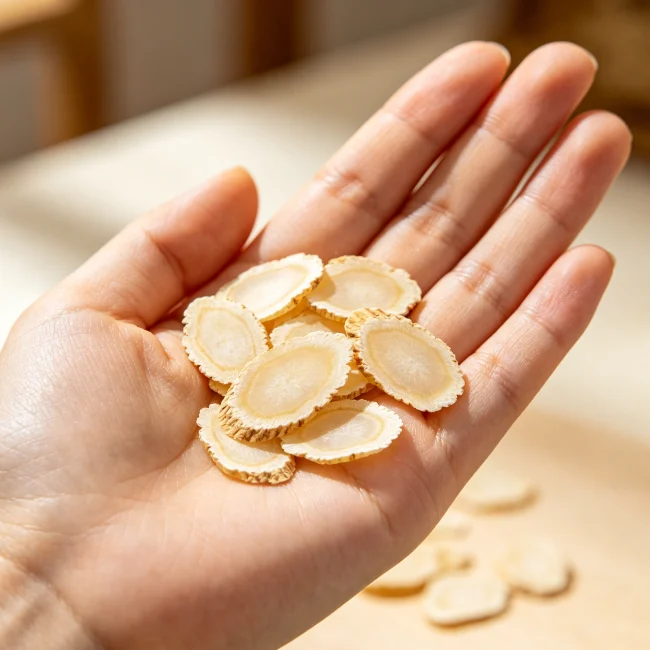
How to Choose American Ginseng Without Getting Tricked?
The quality of American ginseng on the market varies greatly. I also paid some tuition fees when I first started buying. Good and bad slices differ in appearance, smell, and taste.
- Check the color: Good American ginseng slices are light yellow or creamy white with fine textures on the surface. If the color is too white, they may have been fumigated with sulfur; if they are black or dark, it indicates they have been stored for too long or have gotten damp.
- Smell the aroma: Genuine ginseng has a faint, clear fragrance, similar to ginseng but milder. Inferior ginseng smells sour or musty, and some have no smell at all.
- Taste it: Chew a small slice. Good ginseng starts with a slight bitterness but quickly returns with sweetness, leaving your mouth full of a sweet aftertaste. If the bitterness lingers or there is no bitterness at all, the quality is poor.
In terms of price, ordinary American ginseng slices cost about 300 to 500 yuan per catty. Higher-quality ones from the United States or Canada can cost 700 to 800 yuan or even over 1,000 yuan per catty. Be cautious with very cheap ones; slices costing just tens of yuan per catty are likely counterfeit from other ginseng varieties.
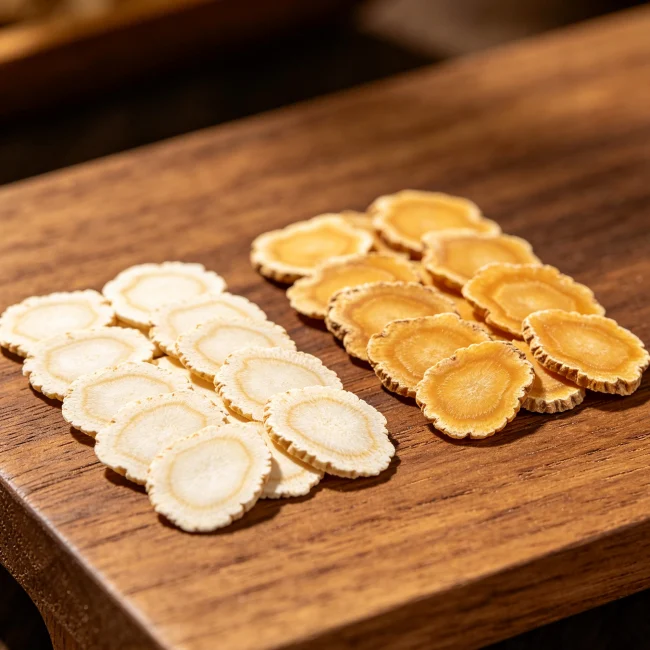
Check the Origin Before Buying American Ginseng
American ginseng is mainly produced in the United States, Canada, and China. Ginseng from the US and Canada has a plump appearance, a strong ginseng flavor, and a distinct sweet aftertaste, and it is also the most expensive. American ginseng introduced to China is mainly grown in Shandong, Beijing, and the Northeast region. Its quality is also good and offers high value for money.
Based on my experience, domestic ginseng is sufficient for daily brewing. If you’re giving it as a gift to an elder or if you are particularly particular about the taste, you can try imported ones. When buying, check the origin label on the packaging; legitimate products will clearly state it.
Also, note that bigger American ginseng is not necessarily better. Some people prefer to buy whole roots and slice them themselves, but the quality of whole roots is harder to judge. For beginners, it’s more convenient to buy pre-cut thin slices, and it’s easier to tell the good from the bad.
Common Questions About American Ginseng
Can American ginseng be taken daily? How long until it takes effect?
American ginseng is a daily dietary supplement that can be taken long-term, but it’s not recommended to consume large amounts every day. I usually take it for two to three days and then take a day off to give my body time to adjust. As for how long it takes to feel the effects, it varies from person to person. Some people feel more energetic after a week or two, while others need more time. Don’t rush; take it slowly.
What goes well with American ginseng?
I’ve tried several combinations, and my favorite is American ginseng with goji berries. Use 3 to 5 slices of American ginseng and a dozen goji berries, steep them in hot water. The taste is sweet, and the color is nice. Some people also add red dates, but the sweetness of red dates is too strong and can mask the ginseng flavor, so I personally don’t recommend it. If you prefer a lighter taste, just brewing American ginseng alone is great.
Who should avoid American ginseng?
Generally speaking, people who are very healthy and don’t feel fatigued don’t need to take it specifically. Pregnant women are advised not to take it. It’s also not recommended for children unless there are special circumstances. If you have a cold or fever, it’s best to pause and resume after recovery. These are common reminders, so don’t worry.
Overall, brewing American ginseng in water is a simple and practical habit. As long as you pay attention to water temperature, separate it from tea, and choose good ginseng, you can easily enjoy its benefits. I hope my experience can help you buy the right ginseng, brew it with the right water, and enjoy the flavor you like.
If you have your own way of consuming American ginseng or have encountered any pitfalls when buying it, feel free to share in the comments section. If you found this article helpful, give it a like to support me, and I’ll continue to write more practical content about ingredients.
 Community Discussion
 Can American ginseng be brewed with tea?
 Featured

No comments yet. Be the first to leave a comment!